
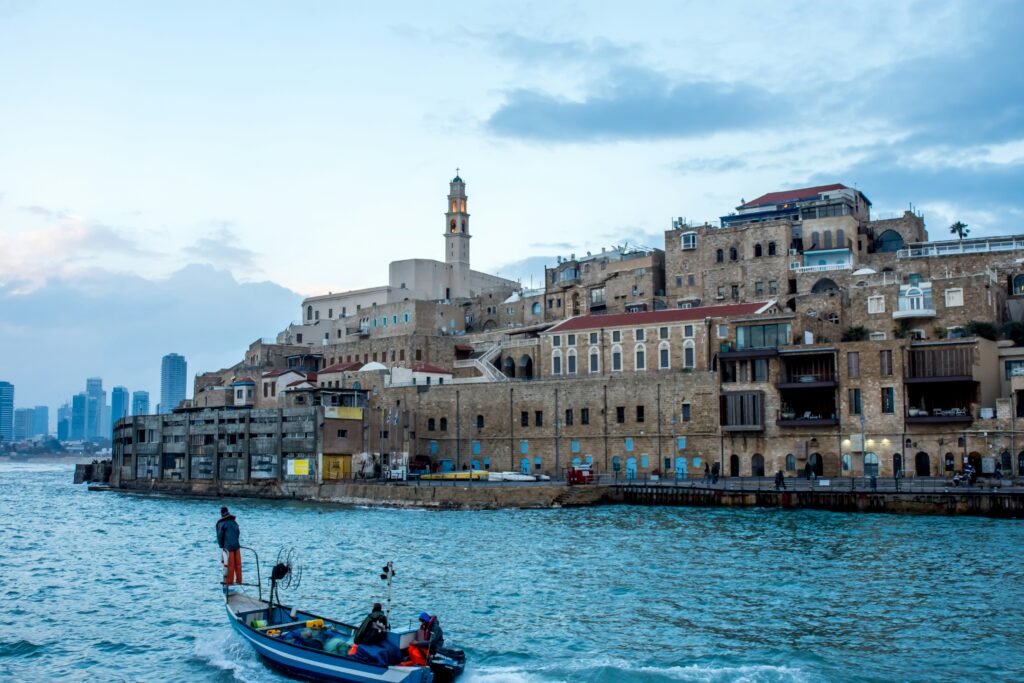
Old Jaffa Port stands as one of the world’s oldest continuously operating harbors, serving maritime trade and fishing for over 7,000 years. Located in Old Jaffa within Tel Aviv-Yafo on Israel’s Mediterranean coast, this historic port has witnessed the rise and fall of civilizations while maintaining its essential role as a gateway to the sea. Today, the Jaffa Port functions as a working fishing harbor, yacht marina, and cultural destination where ancient warehouses have been transformed into galleries and restaurants.
Overview
The name Jaffa derives from the Hebrew Yāfō, meaning “beautiful” or “an eminence,” reflecting its elevated position overlooking the Mediterranean. The Old Jaffa Port combines active maritime operations with cultural attractions, creating a unique destination where visitors can observe traditional fishing boats alongside modern yachts. The Israel Antiquities Authority has conducted extensive excavations here, revealing archaeological layers spanning from the Middle Bronze Age to modern times.
Following the establishment of Israel, the Tel Aviv-Yafo Municipality unified the Jewish city of Tel Aviv and Arab city of Jaffa on April 24, 1950. This merger created the modern Tel Aviv-Yafo, with the ancient port serving as a bridge between the city’s contemporary character and its deep historical roots.
Historical Background
Archaeological evidence confirms that Jaffa Port has operated continuously for over seven millennia, making it among the most ancient harbors still in use worldwide. The port’s strategic location on the eastern Mediterranean coast made it a crucial stop for ancient traders, pilgrims, and conquerors throughout history. Layers of civilization discovered by archaeologists tell the story of Canaanites, Egyptians, Philistines, Israelites, Greeks, Romans, Byzantines, Arabs, Crusaders, Ottomans, and British who all utilized this vital maritime gateway.
The natural harbor formation provided shelter for vessels against Mediterranean storms, while the elevated position of Jaffa offered defensive advantages. Ancient texts and archaeological findings suggest the port facilitated trade in cedar wood from Lebanon, spices from the East, and goods flowing between Europe, Asia, and Africa. The harbor’s enduring significance is as a cultural crossroads where different civilizations encountered and influenced each other.
During the 19th and early 20th centuries, the port served as the primary entry point for Jewish immigrants arriving in Ottoman and later British Mandate Palestine. The harbor infrastructure expanded to accommodate growing trade and passenger traffic, with warehouses and facilities constructed to support increased maritime activity. These structures, built to serve the port’s commercial functions, would later find new life as cultural venues.
The establishment of modern Israel brought significant changes to the port’s operations. While larger commercial shipping moved to newer facilities, Jaffa Port maintained its role in fishing and smaller-scale maritime activities. Urban planners and cultural developers recognized the potential to transform the historic harbor area into a destination that honored its maritime heritage while serving contemporary cultural and recreational needs.
Biblical Reference
Jaffa Port holds profound significance in biblical narratives, featuring prominently in several Old Testament accounts that illuminate its importance in ancient Israel’s history. The harbor’s most famous biblical connection appears in the **Book of Jonah**, where the reluctant prophet boarded a ship at Jaffa Port in his attempt to flee from God’s command to prophesy against Nineveh. The text specifically mentions Jaffa as the departure point for Jonah’s ill-fated voyage, which ended with his encounter with the great fish in the Mediterranean waters beyond the harbor.
During King Solomon’s reign, Jaffa Port served as the primary maritime gateway for constructing the First Temple in Jerusalem. According to the Books of Chronicles and Kings, the port received shipments of precious cedar wood from Lebanon, floated down the Mediterranean coast as massive timber rafts before being landed at Jaffa’s harbor. These Lebanese cedars, renowned throughout the ancient world for their quality and durability, were then transported overland from the port to Jerusalem for use in the temple’s construction. The biblical accounts describe how King Hiram of Tyre arranged these timber deliveries through Jaffa, establishing the port’s role in one of ancient Israel’s most significant building projects.
The Book of Ezra also references Jaffa Port in connection with the Second Temple’s construction, noting that cedar wood from Lebanon again arrived through this harbor during the post-exilic rebuilding efforts. These biblical references establish Jaffa Port not merely as a commercial facility, but as a location where divine plans intersected with human history, making it a site of both practical importance and spiritual significance in the biblical narrative.
Jaffa Port Expansion During the British Mandate
When Britain assumed control of Palestine after World War I, Jaffa Port underwent significant modernization to support the rapidly expanding Shamouti orange industry. The famous citrus exports became the region’s primary source of foreign currency, with Jaffa oranges commanding premium prices in European markets. British engineers expanded the harbor facilities, constructed new warehouses, and improved loading mechanisms to handle the massive seasonal shipments of citrus crates destined for Europe.
The British administration recognized that efficient port operations were essential for the mandate’s economic viability. They invested in concrete quays, electric cranes, and expanded storage facilities to accommodate the orange trade that employed thousands of Arab and Jewish workers. The port’s infrastructure improvements included deeper berthing areas for larger cargo vessels and specialized citrus storage warehouses designed to preserve fruit quality during the Mediterranean shipping season.
However, the Great Arab Revolt of 1936-1939 severely disrupted port operations, with striking Arab dock workers and violent clashes bringing citrus exports to a virtual standstill. The British response included military control of the harbor and the controversial decision to develop an alternative port at Tel Aviv. This period marked the beginning of Jaffa Port’s decline, as British authorities increasingly diverted shipping to facilities under tighter security control.
Inside Old Jaffa Port: What to See
The port area retains its authentic maritime character while offering visitors a glimpse into both ancient and modern life along Israel’s coast. Walking through the harbor complex, visitors encounter active fishing operations alongside converted cultural spaces, creating a living museum where history continues to unfold. The stone architecture reflects various periods of construction and renovation, telling the story of different rulers and communities who shaped this coastal landmark.
The juxtaposition of working boats with art galleries and restaurants creates an atmosphere unique among Israel’s tourist destinations. The scent of salt air mingles with aromas from seafood kitchens, while the sounds of boat engines blend with conversations in multiple languages from visitors exploring the converted warehouses.
Historic Fishing Operations — Traditional fishing boats continue to operate from the harbor, maintaining a maritime tradition that stretches back thousands of years. Local fishermen launch their vessels before dawn, returning with catches that supply both the port’s restaurants and Tel Aviv’s fish markets. Visitors can observe these small-scale fishing operations, watching boats being prepared, nets mended, and daily catches sorted. The fishing activity provides authenticity to the port experience, demonstrating that this remains a working harbor rather than merely a tourist attraction.
Converted Warehouses and Hangars — Former shipping and storage facilities have been transformed into galleries, restaurants, and event spaces while preserving their industrial maritime character. These conversions maintain original architectural elements such as high ceilings, large windows, and exposed beams, creating atmospheric venues that honor the buildings’ commercial past. The adaptive reuse of these structures exemplifies successful historic preservation, allowing visitors to experience the port’s commercial heritage while enjoying contemporary cultural offerings.
Jaffa Light — The lighthouse positioned above the port continues its navigational function while serving as a recognizable landmark for the harbor area. This maritime beacon represents the continuity of the port’s essential role in guiding vessels safely to shore. The lighthouse’s elevated position offers visitors views over the harbor and Mediterranean, providing perspective on the port’s geographic setting and its relationship to the broader coastal landscape.
Ancient Stone Architecture — Buildings throughout the port area showcase construction techniques and materials from different historical periods. Stone walls, archways, and foundations reveal the craftsmanship of various civilizations that contributed to the port’s development. These architectural elements provide tangible connections to the harbor’s long history, allowing visitors to observe how different cultures adapted and expanded the port facilities to meet their needs.
St. Nicholas Armenian Church — The entrance to this historic Armenian church is accessed directly from the port area. The church holds particular historical significance related to Napoleon’s 1799 campaign, when French forces retreated through Jaffa during their failed siege of Acre. During the chaotic retreat, Napoleon’s army established temporary quarters in various buildings throughout Jaffa, including this Armenian church. The French used the church as a makeshift hospital and shelter for wounded soldiers, leaving their mark on the building’s history. Local Armenian records describe the period as traumatic but also note instances of respect shown by some French officers toward the religious site.
Andromeda Rock — The rocky outcrop visible in the harbor carries mythological significance from Greek legends, adding a layer of ancient storytelling to the port’s historical narrative. According to Greek mythology, this rock formation was where Andromeda was chained before Perseus rescued her from a sea monster. The presence of this landmark connects the port to Mediterranean cultural traditions beyond its commercial and strategic importance.
Dvir Gallery — Located in Hangar No. 2, this contemporary art gallery presents rotating exhibitions in a space that exemplifies the creative reuse of port infrastructure. The gallery’s industrial setting provides a distinctive backdrop for modern artistic works, creating dialogue between the harbor’s maritime heritage and contemporary cultural expression. Exhibitions feature both Israeli and international artists, making the venue a significant stop for visitors interested in current artistic developments.
Traditional Seafood Dining — Restaurants throughout the port area specialize in fresh seafood, often featuring catches from the harbor’s own fishing boats. Misedet Hadayagim (The Fishermen’s Restaurant) represents the authentic dining experience available here, where maritime atmosphere enhances meals prepared with ingredients directly connected to the port’s ongoing fishing operations. These establishments provide culinary experiences that reflect both the harbor’s working character and its role as a destination for food enthusiasts.
Marina and Yacht Harbor — Modern pleasure craft and sailing vessels dock alongside traditional fishing boats, illustrating the port’s adaptation to contemporary recreational boating while maintaining its commercial fishing functions. The marina facilities serve both local boat owners and visiting sailors, contributing to the harbor’s continued relevance in Mediterranean maritime activity. This blend of recreational and commercial vessels demonstrates how the ancient port continues to evolve while preserving its essential maritime character.
Visiting Old Jaffa Port: Practical Information
The port area is accessible daily, with most restaurants and galleries operating from morning through evening hours. Specific venues within the harbor complex maintain individual schedules, particularly galleries which may have varying exhibition hours. The official website provides current information about events and venue schedules. Visitors can explore the harbor area freely, though individual attractions may charge admission fees.
The port is located within walking distance of other Old Jaffa attractions, making it convenient to combine with exploration of the broader historic area. According to comprehensive historical sources, the harbor’s compact size allows visitors to experience all major features within a few hours, though the dining and cultural venues invite longer stays.
Nearby Sites
- St. Peter’s Church in Jaffa: Historic Franciscan church built on the site where St. Peter stayed and received his vision.
- St. Nicholas Armenian Church in Jaffa: Beautiful Armenian church featuring traditional architecture and religious artwork.
- The Little Western Wall: A lesser-known section of the Temple Mount’s western wall offering intimate prayer space.
- The Rockefeller Museum: Archaeological museum housing artifacts from prehistoric times through the Ottoman period.
- Jaffa Flea Market: Bustling market featuring antiques, crafts, and local products in the heart of Old Jaffa.
- Clock Tower Square: Ottoman-era landmark serving as a central gathering point in Jaffa with shops and cafes.