
Carmel Market Tel Aviv stands as Israel’s largest and busiest marketplace, serving the city’s residents and visitors since 1920. Located along Carmel Street in the heart of Tel Aviv, this vibrant outdoor market stretches from the junction of King George Street, Allenby, and Sheinkin Street south to the Carmelit Bus depot. The market takes its name from Mount Carmel, the biblical mountain range in northern Israel where Elijah confronted the prophets of Baal.
Overview
The Carmel Market represents the beating heart of Tel Aviv’s commercial and culinary culture. This sprawling marketplace occupies one main street bordered by Allenby Street and Magen David Square, creating a bustling corridor of commerce that attracts locals and tourists alike. The market’s Hebrew name, Shuk HaCarmel, derives from the biblical Mount Carmel, with “Carmel” meaning “God’s vineyard” or “garden-land” from the Hebrew words kerem (vineyard) and el (God).
As Tel Aviv’s premier marketplace, Carmel Market serves multiple functions beyond simple commerce. It acts as a cultural melting pot where the city’s diverse population converges, creating an authentic Israeli experience that showcases the country’s multicultural character. The market’s atmosphere reflects the energy and dynamism that define modern Tel Aviv, making it an essential destination for anyone seeking to understand the city’s contemporary identity.
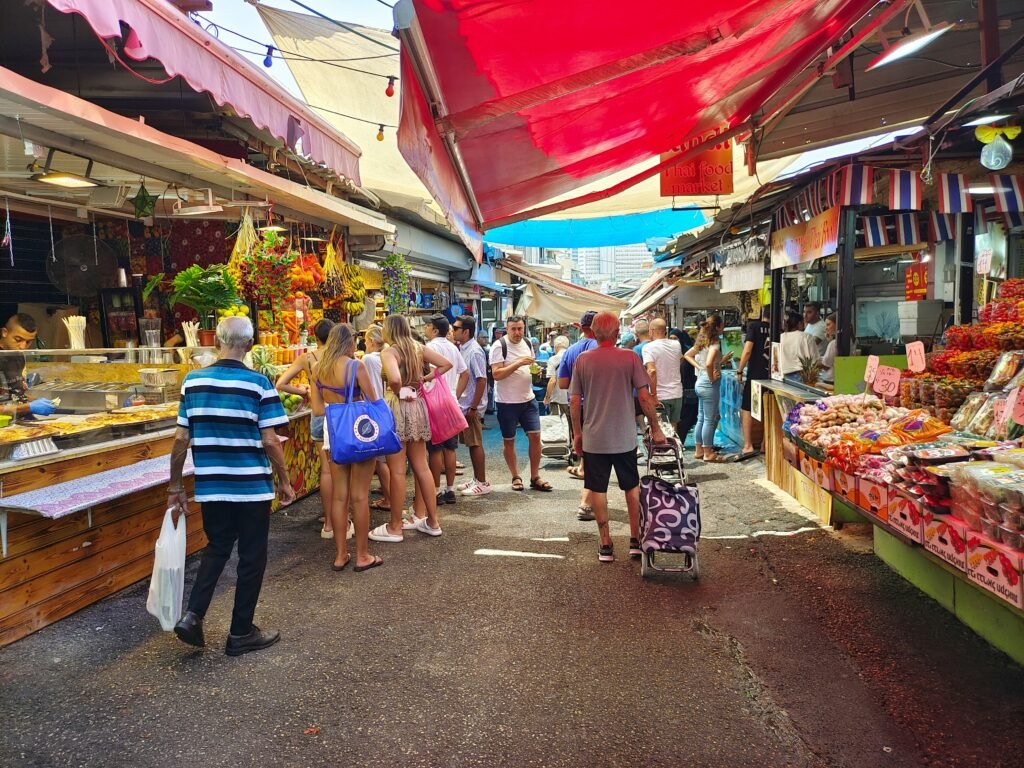
The market spans approximately 1.2 kilometers in length and operates as a semi-covered outdoor space, with some sections featuring protective awnings and canopies installed over the decades. Daily foot traffic reaches tens of thousands of people, with peak periods during Thursday and Friday mornings when locals stock up for the weekend and Shabbat meals. This constant flow of humanity creates an economic ecosystem that supports hundreds of vendors, from third-generation family businesses to innovative food entrepreneurs who have transformed the market into a culinary destination.
Historical Background
The Carmel Market first opened in 1920, eleven years after the establishment of Tel Aviv itself in 1909. The market was originally founded in the Kerem HaTeimanim neighborhood, literally meaning “Vineyard of the Yemenites,” reflecting the significant Yemenite Jewish community that settled in this area of the young city between 1881 and 1914. This location proved ideal for a commercial center, positioned strategically within Tel Aviv’s growing urban landscape and serving the practical needs of the neighborhood’s working-class residents.
The early decades of the 20th century saw waves of Jewish immigration that fundamentally shaped the market’s character. Following World War I, the British Mandate period (1920-1948) brought increased stability and urban development to Tel Aviv. During these years, the market expanded beyond its original boundaries as vendors from various ethnic backgrounds established stalls, creating the multicultural commercial environment that defines the market today. Sephardic Jews from Turkey and Greece, Ashkenazi immigrants from Eastern Europe, and the established Yemenite community each contributed their own commercial traditions and culinary specialties.
Mayor Meir Dizengoff, who served from 1921 to 1925 and again from 1928 to 1936, played a crucial role in the market’s development and expansion during its formative decades. Recognizing the market’s potential as both an economic engine and community gathering place, Dizengoff invested city funds into its growth and infrastructure. Under his leadership, the municipality officially renamed it the Carmel Market in 1926, establishing its identity that continues to this day. Dizengoff’s vision included proper drainage systems, improved access roads, and the first permanent stall structures that replaced earlier temporary setups.
The market’s growth paralleled Tel Aviv’s rapid expansion throughout the 20th century. What began as a modest collection of vendors serving the local Yemenite community evolved into a sprawling commercial hub that would eventually become Israel’s largest marketplace. During the 1948 Arab-Israeli War and subsequent period of austerity (1949-1959), the market became even more essential as a source of affordable goods and basic necessities. The market weathered various challenges, including wars, economic fluctuations, and urban development pressures, while maintaining its essential character as a vital center of daily life in Tel Aviv.
The 1960s and 1970s brought modernization efforts that included the installation of permanent roofing over sections of the market and improved electrical infrastructure. The 1990s economic boom following the Oslo Accords coincided with a culinary renaissance that transformed portions of the market from purely functional commerce into a dining and entertainment destination. This period saw the emergence of chef-owned stalls and upscale eateries alongside traditional vendors.
Inside Carmel Market Tel Aviv: What to See
Walking through Carmel Market Tel Aviv reveals a complex ecosystem of commerce, cuisine, and culture that reflects the diversity of Israeli society. The market’s layout flows naturally from fresh produce at its southern end to fashion and electronics in its northern section, creating distinct zones that each offer unique experiences. The sensory experience is immediate and overwhelming: the calls of vendors in Hebrew, Arabic, and English mixing with the aromas of fresh spices, grilled meats, and brewing coffee.
The market’s character changes throughout the day, with early morning hours dominated by serious shoppers seeking the freshest produce, while afternoons and evenings attract a more diverse crowd of tourists, young professionals, and food enthusiasts. This natural rhythm creates an authentic glimpse into Israeli daily life, where the practical necessity of grocery shopping transforms into a social and cultural experience. The architecture itself tells the market’s story, with original 1920s stone foundations supporting metal framework additions from the 1960s, topped by modern awnings and lighting systems installed in recent decades.
Fresh Produce Stalls — The heart of Carmel Market lies in its extensive fresh produce section, where enormous quantities of fruits, vegetables, spices, meat, and fish are sold at prices that attract both budget-conscious locals and curious visitors. Over 40 dedicated produce stalls create a maze of colorful displays featuring seasonal Israeli agricultural products alongside imported specialties from Mediterranean and tropical regions. These stalls represent the market’s original function and continue to serve as the primary source of fresh ingredients for many Tel Aviv residents.
Vendors arrange their goods in carefully orchestrated displays that showcase Israel’s agricultural abundance, from locally grown citrus fruits harvested in nearby Sharon Plain orchards to avocados from the Galilee region and dates from the Jordan Valley. The spice stalls feature towers of cumin, turmeric, sumac, and za’atar, with many vendors offering custom spice blends that reflect both Middle Eastern traditions and contemporary Israeli fusion cooking. Fish vendors display Mediterranean catches including sea bream, sea bass, and sardines alongside imported salmon and tuna, with many offering same-day cleaning and preparation services.
The meat section operates under strict kashrut supervision, with separate areas for beef, chicken, and lamb products sourced from certified Israeli suppliers. Several stalls specialize in traditional Middle Eastern preparations, including house-made merguez sausages, seasoned ground meat for kebabs, and marinated cuts prepared according to various ethnic traditions represented in Israeli society.
Traditional Yemenite Food — The market’s roots in the Kerem HaTeimanim neighborhood remain visible through its exceptional Yemenite food offerings, concentrated in the market’s original southern section where the community first established their commercial presence. Visitors can watch skilled cooks prepare hand-made Jachnun, the traditional Yemenite pastry that requires overnight preparation and has become a beloved Israeli breakfast staple, alongside malawach (another flaky bread), and various hilbe (fenugreek) preparations that reflect ancient Yemenite culinary traditions.
These food stalls preserve culinary techniques that date back generations while adapting to contemporary tastes and dietary preferences. Traditional Yemenite restaurants within the market serve sahawiq (hot pepper relish), Hawaiian coffee prepared in traditional finjan pots, and various meat and vegetable stews that showcase the sophisticated spice combinations that define Yemenite cuisine. Many of these establishments remain family-operated businesses, with recipes and techniques passed down through three or four generations of market vendors.
Fashion and Electronics Section — The northern part of Carmel Market, stretching from the intersection with Nahalat Binyamin Street toward Allenby Street, focuses on clothing, electronics, and housewares, offering everything from basic cotton clothes to designer threads at competitive prices. Over 30 fashion stalls create an outdoor department store atmosphere, with merchandise ranging from locally manufactured basics to imported fashion accessories and footwear.
This section attracts a younger demographic seeking affordable fashion options and the latest electronic gadgets. Electronics stalls feature everything from smartphone accessories and bluetooth speakers to small appliances and computer peripherals, often at prices significantly lower than established retail stores. The merchandise ranges from practical everyday items like luggage and household goods to trendy accessories including handcrafted jewelry, leather goods, and designer knockoffs, creating a shopping environment that caters to diverse budgets and style preferences.
Several vintage clothing stalls have gained cult followings among Tel Aviv fashion enthusiasts, offering carefully curated selections of retro pieces from various decades alongside contemporary sustainable fashion options. These vendors often provide personal styling services and custom alterations, transforming simple shopping transactions into collaborative fashion experiences.
Street Food and Eateries — Modern coffee stands, bars, chef-owned food stalls, and traditional ethnic restaurants have transformed parts of the market into a culinary destination that extends well beyond basic grocery shopping. The market now hosts over 25 dedicated food establishments, ranging from traditional Middle Eastern eateries to innovative fusion concepts that incorporate global culinary trends with local ingredients.
Food enthusiasts can find everything from traditional Middle Eastern dishes like falafel, hummus, and shawarma to international fusion cuisine, with many establishments earning reputations that extend far beyond the market itself. Popular spots include juice bars serving fresh-pressed combinations of local fruits and vegetables, gourmet sandwich shops that elevate simple preparations with premium ingredients, and specialized dessert stalls offering everything from traditional Middle Eastern sweets to artisanal ice cream flavors.
The concentration of dining options has earned the market recognition as having one of the highest ratios of eateries per square meter in Israel. Several chef-owned restaurants have earned mentions in international food guides, while maintaining the casual, accessible atmosphere that defines the market experience. Many establishments source ingredients directly from produce vendors within the market, creating a farm-to-table experience within an urban commercial environment.
Nahalat Binyamin Arts Market — On Tuesdays and Fridays, the adjacent Nahalat Binyamin street transforms into a lively arts and crafts market that complements the main market’s commercial offerings. Over 200 local artists, craftspeople, and designers display jewelry, art, and handmade items that showcase Israeli creativity and artistic talent across a pedestrian-only street stretching three blocks.
This weekly addition creates a cultural dimension that elevates the market experience beyond simple shopping, offering visitors the opportunity to purchase unique, locally-created souvenirs and gifts. The arts market features everything from traditional Judaica crafted by religious artisans to contemporary sculpture and photography by emerging Israeli artists. Jewelry stalls showcase both traditional Middle Eastern silverwork and modern designs incorporating materials like Jerusalem stone, Red Sea coral, and recycled metals.
The surrounding streets have developed their own identity as extensions of the main market, with emerging food scenes in parallel streets featuring new bars, restaurants, and innovative food stalls that push culinary boundaries while maintaining connection to the market’s authentic character. HaHashmal Street and the surrounding grid have become known as the “Carmel Market Quarter,” hosting evening dining and nightlife options that extend the market’s influence beyond traditional daytime hours.
Visiting Carmel Market Tel Aviv: Practical Information
Carmel Market operates Sunday through Friday, typically opening early in the morning around 8:00 AM and closing before sunset, with Friday hours ending earlier for Shabbat preparation. The market is closed on Saturdays in observance of Shabbat. Entry to the market itself is free, though individual vendors set their own prices for goods and services. The market is easily accessible by public transportation, with multiple bus lines serving the area and the nearest train station within walking distance.
Nearby Sites
- Jaffa Flea Market: A historic flea market in nearby Jaffa featuring antiques, vintage items, and bohemian atmosphere.
- Neve Tzedek Tel Aviv: Tel Aviv’s first neighborhood, now a trendy area with boutique shops, galleries, and cafes.
- Nahalat Binyamin Pedestrian Mall: The weekly arts and crafts market that operates on Tuesdays and Fridays adjacent to Carmel Market.
- Rothschild Boulevard: Tel Aviv’s cultural and architectural spine featuring Bauhaus buildings, cafes, and the Independence Hall.
- Bialik Street: A cultural street housing the Tel Aviv Museum, Beit Hair, and historic architecture.
- Florentin Neighborhood: An emerging arts district south of the market known for street art, nightlife, and alternative culture.