
The Dung Gate: A Gateway to Holiness
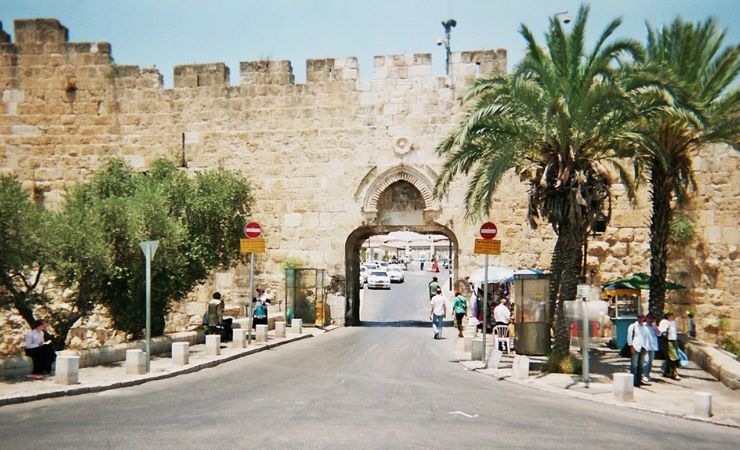
The Dung Gate, also known as the Silwan Gate or the Mughrabi Gate, is one of the eight gates in the Old City of Jerusalem. It offers access to some of its most significant sites such as the Western Wall and the Al Aqsa mosque.
Location
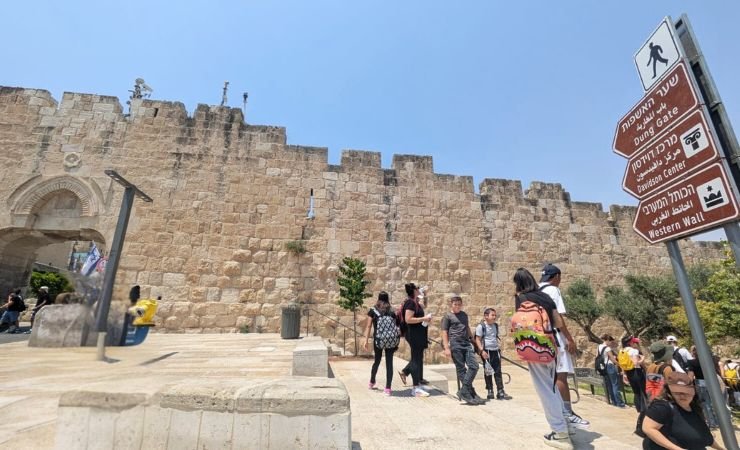
The Dung Gate is situated near the southeast corner of the Old City of Jerusalem not far from the Jerusalem Archeological Park (Davidson Center). It is a main passage for vehicles exiting the Old City.
What's in a Name?
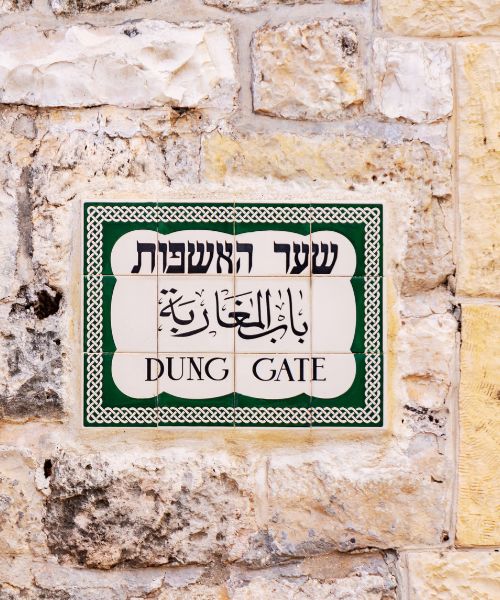
The unique name “Dung Gate” finds its origins in biblical times. Mentioned in the Book of Nehemiah (Nehemiah 2:13), it is believed that an ancient gate in a similar location served as a dispatch point for the city’s refuse and ashes, which were transported out to the Hinnom Valley for burning. This practice likely earned the gate its descriptive, albeit unglamorous, moniker. Historically, it was also known as the “Potter’s Gate” due to its proximity to the potter’s quarter of the city.
In Arabic, the gate is often called Bab al-Maghariba, or “Gate of the Maghrebis/Moroccans.” This name refers to the Mughrabi Quarter, a neighborhood of North African immigrants who settled in the area after fighting alongside Salah al-Din in the 12th century. This quarter, once situated just inside the gate, was razed after the Six-Day War in 1967 to create the Western Wall Plaza.
The Ottoman Origins of the Dung Gate
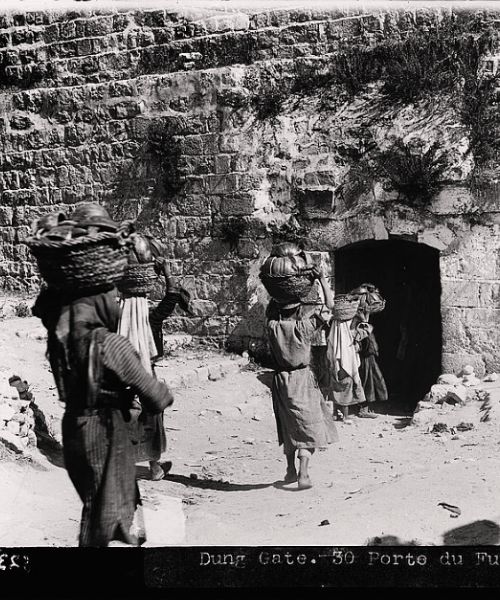
The current Dung Gate is part of the magnificent city walls erected by the Ottoman Sultan Suleiman the Magnificent between 1537 and 1541. Initially, it was a modest postern gate, only about 1.5 meters wide, designed primarily for pedestrians and pack animals. It lacked a defensive gate tower, a feature common to other major gates of the Old City, and was therefore open for limited periods each day.
Over the centuries, the gate has undergone several significant transformations to accommodate the city’s growing needs. In 1938, British Mandate officials removed an outer gatehouse, likely to restore the walls to their original 16th-century appearance. A major widening project was undertaken in 1952 by the Jordanian authorities to allow for vehicular traffic, including cars and buses. This involved installing a reinforced concrete girder beneath the existing stone arch.
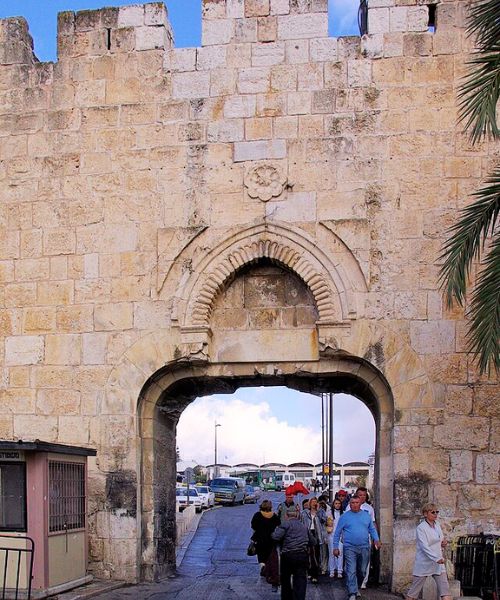
The gate was further enlarged in 1985 by Israeli authorities. This renovation, undertaken with extensive planning due to the site’s historical sensitivity, saw the original arch and decorative elements raised to create an opening of 4.5 meters in height. The modern gate, while built with reinforced concrete, is clad in stone, carefully blending the new construction with the historic wall. Landscape architect Shlomo Aronson and architect Arthur Kutcher played key roles in this redesign.
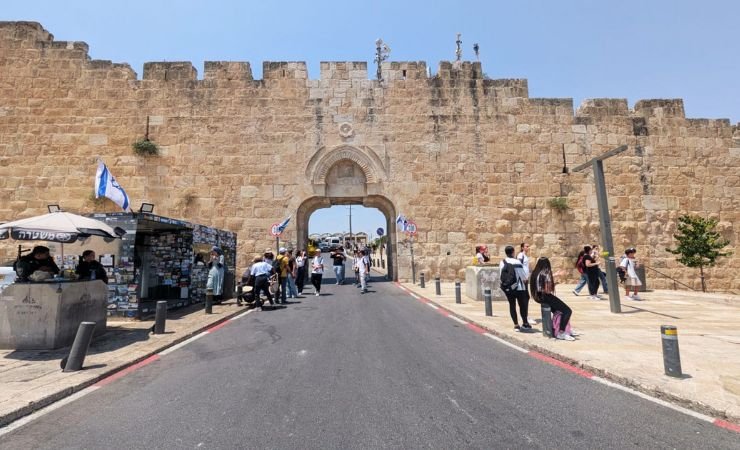
Today, the Dung Gate is one of the most heavily trafficked entry points into the Old City of Jerusalem. It serves as the primary passage for vehicles exiting the Old City and for buses heading to the Western Wall.
Additional Information
- 648 A.D.: During Caliph Omar’s conquest of Jerusalem, trash is cleared out of the city through the gate that would become known as the Dung Gate.
- Ottoman Period: The current Dung Gate is built as a small postern gate (1.5 meters wide) with an arch, designed for pedestrians and pack animals, as part of the new city walls erected by Ottoman Sultan Suleiman the Magnificent. North African immigrants (Maghrebis) live in neighborhoods next to the gate, leading to its Arabic name “Bab al-Maghariba” (Gate of the Maghrebis).
- 19th Century:
- Zionists begin referring to the gate as “Dung Gate” (Sha’ar Ha’ashpot), commemorating an ancient biblical gate near the Pool of Siloam used for residue removal from the Jewish Temple.
- Inhabitants of the city begin relocating towards the slopes of the City of David and surrounding villages, increasing pressure to open the Dung Gate for easier movement.
- 1936-1939 (Arab Revolt): The New Gate is closed with barbed wire by the British. The British restore the walls to their original look, bringing the old stone decorations back to light. This creates a straight pedestrian passageway.
- 1948-1967: Jordanians control the Old City. The Jordanians widen the gate to allow vehicle passage, installing a reinforced concrete girder under the old stone arch.
- 1967 (Six-Day War): Israel reclaims the Old City. The gate becomes the main entry to the Western (Wailing) Wall and the Jewish Quarter.
- 1984-1985: The Dung Gate is enlarged by Israeli authorities. The old arch and decorative elements are raised, reaching a height of 4.5 meters. The modern gate is clad in stone and features a more curvy opening line.
Sites Nearby the Dung Gate
Jerusalem Archaeological Park and Davidson Centre: Right after entering the Dung Gate, these sites offer a glimpse into the city’s past with ruins of walls from different periods of Jerusalem’s history.
City of David: This archaeological site is believed to be the original urban core of ancient Jerusalem. Visitors can explore ancient ruins and walk through Hezekiah’s Tunnel, a remarkable feat of engineering from the biblical era.
- Western Wall: Also known as the Wailing Wall, this is one of the most sacred sites in Judaism. It’s a place of prayer and pilgrimage sacred to the Jewish people.
Western Wall Tunnels: These tunnels reveal the full length of the Western Wall hidden beneath the Old City, offering a unique perspective on this significant religious site.
- Al-Aqsa Mosque: This is the third holiest site in Islam and is located on the Temple Mount.
- Pool of Siloam: An ancient pool where, according to the New Testament, Jesus healed a man who had been blind since birth.