Zion Gate serves as the southern entrance to Jerusalem's Old City, connecting the Armenian Quarter to Mount Zion. Built by Suleiman the Magnificent in 1540, it bears thousands of bullet holes from the 1948 Arab-Israeli War, when Israeli forces fought to break the siege of the Jewish Quarter, making it a powerful symbol of Jerusalem's modern conflicts.
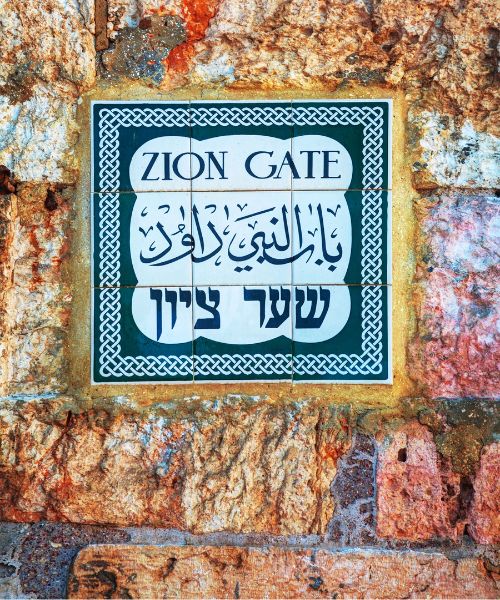
The Zion Gate, also known as Bab Harat al-Yahud in Arabic and Sha’ar Zion in Hebrew, is one of the eight gates in the Old City of Jerusalem. This battle-scarred entrance connects the city walls to Mount Zion and provides direct access to both the Armenian and Jewish Quarters. Its strategic position made it vital for defense efforts and for delivering assistance to the besieged Jewish Quarter during Israel’s War of Independence, when fierce fighting left permanent bullet holes and shrapnel scars that remain visible across the ancient stonework of this Ottoman-era fortification.
Location
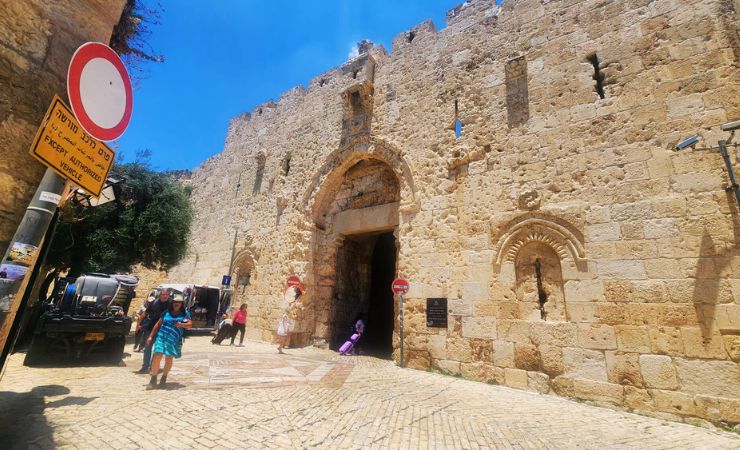
The Zion Gate stands at the southern edge of Jerusalem’s Old City walls, positioned where the medieval city meets Mount Zion. The gate provides direct access to both the Armenian and Jewish Quarters while creating a vital link to significant religious sites outside the walls, including King David’s Tomb, the Room of the Last Supper, and Dormition Abbey. The gate opens onto a small plaza that connects to parking areas and walking paths leading up Mount Zion’s slopes.
A Dive into the History of the Zion Gate
Sultan Suleiman the Magnificent ordered the construction of Zion Gate in July 1540, as part of his comprehensive rebuilding of Jerusalem’s defensive walls. The gate replaced an earlier medieval entrance that stood further east, which had provided direct continuation of the Street of the Jews, also known as the Cardo Maximus. The Ottoman engineers incorporated six sentry towers into the southern wall segment, with four positioned specifically along the Mount Zion section to maximize defensive coverage of this vulnerable approach to the city.
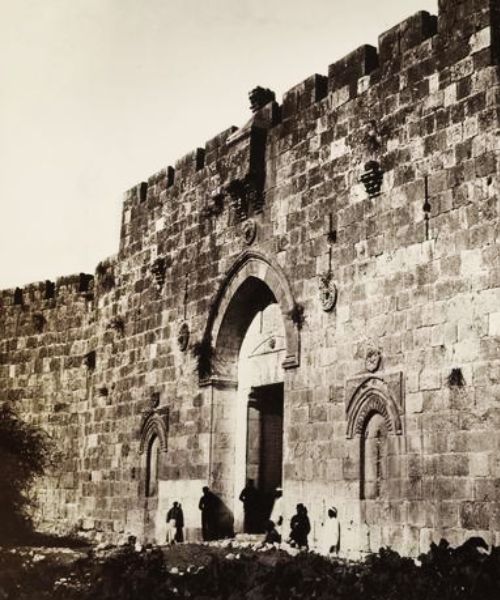
During the second half of the nineteenth century, the area around Zion Gate underwent significant urban development. Ottoman authorities established a leper colony, slaughter house, and livestock market in the vicinity, reflecting the gate’s role as a working entrance to the city rather than merely a ceremonial portal. By the late nineteenth century, merchants had constructed shops along the entire length of the southern wall, creating a bustling commercial district. The British Mandate authorities later demolished these structures as part of their urban planning efforts to preserve the wall’s historical integrity.
The Jerusalem Foundation sponsored an extensive restoration project in 1984, addressing decades of damage from both vehicular traffic and military conflicts. The project carefully preserved the visible battle scars from 1948 and 1967 while stabilizing the structure itself. Workers created a small plaza connecting the gate to designated parking areas, built two seating areas for visitors, and restored the medieval gatehouse door that had been damaged during a violent storm in 1894. The entire area around the gate received stone paving that matched the historical character of the Old City.
Another major restoration effort took place in 2008, marking the gate’s 468th anniversary. Conservation specialists cleaned the ancient stones and replaced those too damaged to preserve, while maintaining the original shell and bullet damage from Israel’s War of Independence. This deliberate preservation of battle scars serves as a permanent reminder of the gate’s role in Jerusalem’s modern conflicts and the price paid for the city’s liberation.
Zion Gate during Israel's War of Independence
Lifeline for the Jewish Quarter
From late November 1947 until May 1948, the Jewish Quarter endured a devastating siege that gradually strangled the community’s 1,700 residents. After Arab forces successfully blocked access via Jaffa Gate on January 1, 1948, Zion Gate became the sole lifeline for essential supplies including food, medicine, and ammunition. British authorities maintained strict control over this route, permitting supply convoys escorted by British soldiers to pass through only twice weekly. Every convoy faced rigorous inspection, with British officers carefully monitoring both cargo contents and the individuals permitted to enter the besieged quarter.
Transfer of Control
On May 13, 1948, as the final British Army units prepared to evacuate Jerusalem, Major James Bramwell of the Suffolk Regiment performed a symbolic ceremony that resonated through Jewish history. Standing at Zion Gate, he formally handed the heavy iron key to Mordechai Weingarten, the elected leader (“mukhtar”) of the Jewish Quarter. This ceremonial act represented the first time in nearly two thousand years that Jews had formally received control of one of Jerusalem’s historic gates, marking a profound moment in the restoration of Jewish sovereignty over their ancient holy city.
Intense Fighting and Shifting Control
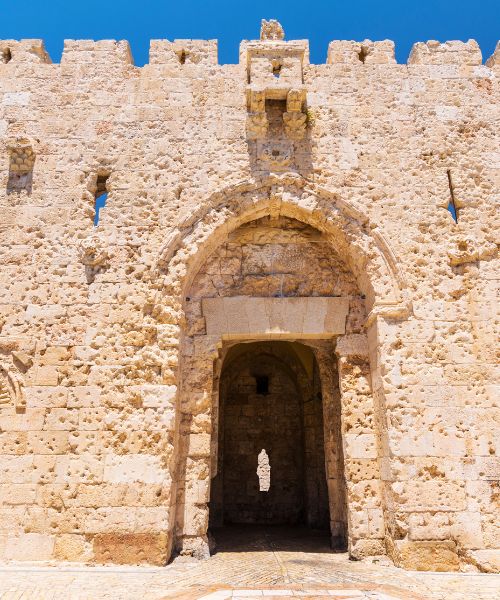
The gate’s ancient stones bear countless scars from the fierce combat that followed, with bullet holes and shrapnel damage covering virtually every surface, earning Zion Gate the enduring nickname “Wounded Gate.”
Control of the gate changed hands three separate times during the brutal fighting, demonstrating the strategic importance both sides placed on this critical access point.
After British withdrawal, Jewish defense forces initially established strong positions on nearby rooftops, but evacuated a crucial observation post near the gate at the urgent request of the Armenian Patriarchate, who feared damage to their adjacent properties. Arab Legion forces immediately occupied this strategic position, gaining a commanding view of the gate and surrounding approaches that would prove decisive in subsequent battles.
Recognizing the desperate situation within the Jewish Quarter, Palmach units from the elite Harel Brigade successfully captured nearby Mount Zion on May 17, establishing a forward base that would enable their attempted breakthrough at the gate.
During the night of May 17-18, 1948, a Palmach assault force commanded by future IDF Chief of Staff David Elazar managed to blast through Zion Gate using explosives, briefly establishing contact with the exhausted defenders trapped within the Jewish Quarter. However, insufficient reinforcements and the fighters’ extreme exhaustion forced them to withdraw, allowing Jordanian Legion forces to recapture this vital position within hours.
Operation Kedem, launched on July 17, 1948, represented the final attempt to breach Zion Gate through military force, but even concentrated explosive charges failed to create a sustainable breach in the fortification.
Symbol of Surrender and Exile
On May 28, 1948, after enduring weeks of relentless bombardment and facing imminent starvation, the Jewish Quarter formally surrendered. Approximately 1,200 residents and fighters, including wounded defenders and elderly civilians, were escorted through Zion Gate under Jordanian Legion guard and transported to safety in West Jerusalem. This evacuation marked the end of nearly two millennia of continuous Jewish presence in the Old City, broken only briefly during a 16th-century expulsion, and would not be restored until Israeli forces liberated the Old City during the Six-Day War nineteen years later.
Architectural and Archaeological Features
Zion Gate exemplifies the sophisticated defensive architecture of the Ottoman period, incorporating both Islamic architectural traditions and practical military engineering. The gate’s most distinctive feature is its L-shaped entryway, a deliberate design choice that forced attacking armies to navigate a sharp turn while exposed to defensive fire from multiple angles. This configuration exposed the unprotected right side of right-handed warriors carrying shields on their left arms, a tactical advantage exploited throughout medieval and early modern fortifications.
The gate’s exterior facade features a distinctive pointed arch characteristic of Islamic architectural traditions, constructed from the honey-colored Jerusalem limestone that defines the Old City’s visual character. Above the arch, master stonemasons carved an elaborate Arabic inscription that honors Sultan Suleiman the Magnificent and records 947 in the Islamic calendar (1540 CE), providing precise dating for the structure’s completion. Archaeological evidence reveals that Ottoman builders incorporated decorative elements and carved stones salvaged from earlier Crusader and Byzantine structures, a common practice that both conserved materials and symbolically claimed continuity with previous rulers.
Practical Information
Access: Zion Gate remains open 24 hours daily with no admission fees. The gate provides pedestrian access only; vehicles cannot pass through the historic opening.
Parking: A designated parking area is located immediately outside the gate, with spaces typically available for 15-20 NIS per hour (approximately $4-5 USD). Additional parking can be found along the access road to Mount Zion.
Accessibility: The gate passage includes several stone steps and uneven surfaces that may challenge wheelchair users and those with mobility limitations. The plaza area outside the gate is generally accessible.
Additional Information
- 1540: Zion Gate Constructed.
- 16th Century CE: A Jewish traveler mentions three gates on the Zion side, with one being guarded by a Jew.
- 17th Century CE: A rabbi visiting Jerusalem mentions “Zion Gate, which is the gate to the tombs of the House of David.”
- May 13, 1948: As the British Army withdraws from Jerusalem, a British major from the Suffolk Regiment presents the key for Zion Gate to Mordechai Weingarten, the “mukhtar” of the Jewish Quarter. Later the same day, with the British withdrawal, approximately 1,700 Jews remain in the Jewish Quarter, defended by about 150 fighters.
- May 28, 1948: The Jewish Quarter surrenders. Around 1,200 Jews are escorted out of the Old City through the Zion Gate.
- 1948-1967: Zion Gate is closed as the border with Jordan passes nearby. The Jewish Quarter remains under Jordanian rule, with significant damage and destruction to its synagogues.
- June 1967 (Six-Day War): Israel occupies the Old City. Zion Gate is reopened. The Jewish Quarter is unified with the rest of Jerusalem.
- 1984 and 2008: Restoration projects at the Gate.
Why is Zion Gate called the “Wounded Gate”?
Zion Gate earned the nickname “Wounded Gate” due to the extensive bullet holes and shrapnel damage covering its stone surfaces from intense fighting during Israel’s War of Independence in 1948. The battle scars remain deliberately preserved as a historical reminder of the fierce combat that took place here. These visible marks of war make Zion Gate unique among Jerusalem’s ancient gates.
What happened to the key of Zion Gate in 1948?
On May 13, 1948, Major James Bramwell of the British Suffolk Regiment ceremonially handed the iron key of Zion Gate to Mordechai Weingarten, the elected leader of the Jewish Quarter. This symbolic act marked the first time in nearly 2,000 years that Jews formally received control of one of Jerusalem’s historic gates. The ceremony occurred just before the British evacuation of Jerusalem.
Which quarters of the Old City can you reach through Zion Gate?
Zion Gate provides direct access to both the Armenian Quarter and the Jewish Quarter of Jerusalem’s Old City. The gate serves as the primary southern entrance to these quarters, connecting them with Mount Zion and its important religious sites. From the gate, visitors can easily walk to major attractions in both quarters.
How old is Zion Gate and when was it built?
Zion Gate was constructed in July 1540 during the reign of Ottoman Sultan Suleiman the Magnificent. The gate is therefore over 480 years old, making it part of the current walls that surround Jerusalem’s Old City. An Arabic inscription above the gate’s arch records the exact year of construction according to the Islamic calendar.
Nearby Sites
- The Armenian Quarter: This area is rich in history, with beautiful narrow streets, old houses, and the St. James Cathedral, the heart of the Armenian Orthodox Church in Jerusalem.
-
The Room of the Last Supper: Also known as the Cenacle, this is a revered site located on Mount Zion, believed to be the location where Jesus had his final meal with his disciples before his crucifixion.
-
King David’s Tomb: This is a site traditionally believed to be the burial place of David, the famed king of Israel, and is located on Mount Zion in a building that also houses the Room of the Last Supper.
-
Dormition Abbey: This is a massive basilica located on Mount Zion, believed to be the site where the Virgin Mary passed away, or “fell asleep,” as the name ‘Dormition’ suggests.
-
The Broad Wall: The Broad Wall is an ancient defensive structure in Jerusalem, built during the reign of King Hezekiah in the 8th century BCE.